
7 Proven Ways Muscle Strain Therapy Gets You Back on Your Feet Faster
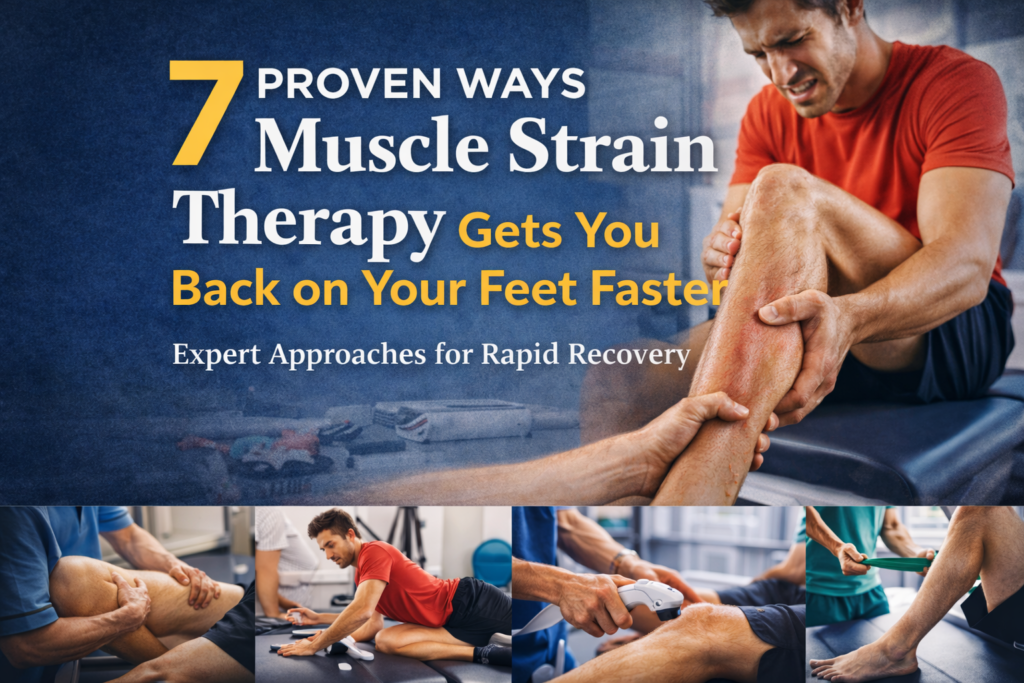
A muscle strain can stop you in your tracks whether it happens during a morning run, a gym session, or simply lifting something the wrong way. The pain, stiffness, and limited mobility that follow can disrupt your daily life, your work, and your overall wellbeing. The good news is that with the right approach, recovery doesn’t have to be slow or uncertain.
Muscle strain therapy is one of the most effective and science-backed ways to recover from muscle injuries faster, more safely, and with a significantly lower risk of re-injury. Whether your strain is mild or severe, professional therapy can make a dramatic difference in how quickly and completely you heal.
Here are 7 proven ways muscle strain therapy gets you back on your feet faster than you thought possible.
1. Accurate Assessment and Diagnosis
The first and most important step in any effective muscle strain therapy program is a thorough assessment. Not all strains are the same. A Grade 1 strain involves minor fiber damage, while a Grade 3 strain can mean a complete muscle tear requiring careful, structured rehabilitation.
A professional physical therapist will evaluate the severity of your injury, identify which muscles and surrounding structures are affected, and determine the most appropriate treatment plan. Skipping this step and treating all strains the same way is one of the biggest reasons people experience prolonged recovery or re-injury.
Getting an accurate diagnosis from the start ensures that every treatment decision is targeted, effective, and safe for your specific condition.

2. Manual Therapy to Relieve Pain and Tension
One of the most immediate benefits of muscle strain therapy is hands-on manual therapy. Techniques such as soft tissue mobilization, myofascial release, and trigger point therapy work directly on the injured muscle to reduce tension, break up scar tissue, and restore healthy blood flow to the area.
Manual therapy not only reduces pain quickly but also prepares the muscle for more active rehabilitation. When tight, restricted tissue is released, the surrounding muscles can move more freely accelerating the entire healing process.
Many patients report significant pain relief after just one or two manual therapy sessions, making it one of the most powerful tools in a therapist’s toolkit.
3. Targeted Stretching and Flexibility Training
Stiffness is one of the most common and frustrating side effects of a muscle strain. Without proper stretching and flexibility work, scar tissue forms in a disorganized pattern leading to chronic tightness, reduced range of motion, and a much higher risk of straining the same muscle again in the future.
Muscle strain therapy incorporates structured, progressive stretching protocols that guide the healing tissue to align properly. Your therapist will introduce gentle stretches early in recovery and gradually increase intensity as the muscle heals, ensuring flexibility is fully restored by the time you return to your normal activities.
This step is especially critical for athletes, active individuals, and anyone whose daily routine demands physical movement.
4. Strengthening Exercises to Rebuild Muscle Function
Rest alone is not enough to fully recover from a muscle strain. While the initial rest period is necessary to prevent further damage, prolonged inactivity leads to muscle weakness and atrophy which increases vulnerability to future injuries.
Physical therapy services include carefully designed strengthening programs that rebuild the injured muscle progressively. Starting with low-resistance exercises and gradually increasing load, these programs restore full muscle strength, endurance, and neuromuscular control.
Strengthening the muscles around the injury site is equally important. Supporting muscles that are strong and balanced reduce the mechanical stress placed on the previously injured area, creating a more resilient and protected body overall.
5. Full-Body Physical Therapy for Whole-Body Balance
Here’s something many people don’t realize a muscle strain in one area of your body often reflects a weakness or imbalance somewhere else. For example, a hamstring strain may be linked to weak glutes or tight hip flexors. A shoulder strain may result from poor thoracic spine mobility.
This is where full-body physical therapy becomes a game-changer. Rather than treating the injured muscle in isolation, a full-body approach evaluates and addresses the entire musculoskeletal system. Your therapist identifies contributing factors postural imbalances, movement dysfunctions, muscle weaknesses and corrects them as part of your recovery plan.
The result is not just a healed muscle, but a stronger, better-balanced body that is far less likely to sustain the same injury again. Full-body physical therapy is the difference between temporary relief and lasting recovery.
6. Modalities That Accelerate Tissue Healing
Modern muscle strain therapy uses a range of advanced therapeutic modalities to speed up the biological healing process at the tissue level. These include:
Ultrasound Therapy uses sound waves to increase circulation and reduce inflammation deep within the muscle tissue, promoting faster cellular repair.
Electrical Stimulation (TENS/NMES) reduces pain signals and stimulates muscle contractions to prevent atrophy during the early stages of recovery.
Heat and Cold Therapy applied strategically to manage inflammation, reduce muscle spasm, and improve tissue extensibility before stretching and exercise.
Dry Needling targets trigger points within the strained muscle to release chronic tension and restore normal muscle function.
These modalities are most effective when combined with hands-on therapy and exercise and a skilled physical therapist knows exactly when and how to use each one for maximum benefit.
7. Education and Injury Prevention Planning
The final and often overlooked component of effective muscle strain therapy is education. Understanding why your strain happened and what lifestyle, movement, or training factors contributed to it is essential for preventing it from happening again.
Your physical therapist will work with you to identify risk factors, teach proper movement mechanics, and design a long-term injury prevention plan tailored to your lifestyle and goals. Whether you’re an athlete trying to return to sport or someone who wants to stay active and pain-free into older age, this guidance is invaluable.
For anyone seeking physical therapy in Richmond, working with a team that prioritizes education alongside treatment means you leave not just healed but empowered.
Start Your Recovery the Right Way
Muscle strains are common, but slow and incomplete recovery doesn’t have to be. With the right muscle strain therapy plan one that combines accurate assessment, manual therapy, targeted exercise, and full-body rehabilitation you can recover faster, move better, and significantly reduce your risk of future injury.
Polygon PT is committed to providing personalized, evidence-based care that gets real results. If you’re dealing with a muscle strain and want to get back on your feet as quickly as possible, don’t wait. The sooner you start therapy, the faster and more completely you’ll recover.