
What Is Dry Needling? A Physical Therapist’s Complete Guide
Dry needling is an advanced therapeutic technique employed by physical therapists to alleviate pain, improve mobility, and enhance the overall physical function of patients. It involves inserting thin needles into specific muscle trigger points to elicit a healing response, thus addressing musculoskeletal pain and dysfunction. This guide will provide a comprehensive overview of dry needling, including its mechanisms, benefits, and practical applications within physical therapy. Patients often seek effective treatment options for conditions like chronic pain and muscle tightness, and dry needling offers a valuable solution. This article will cover the definition, clinical overview, mechanisms, benefits, and how dry needling integrates into standard physical therapy practices.
Dry Needling in Physical Therapy: A Comprehensive Guide
Dry needling is a specialized technique used in physical therapy that targets myofascial pain through the insertion of thin needles into trigger points within muscles. This practice aims to release muscle tension, stimulate healing, and enhance overall function. The approach has gained significant popularity due to its ability to provide immediate relief for various musculoskeletal issues. Patients typically experience improved range of motion and reduced pain levels, making it a compelling option among rehabilitative therapies. The effectiveness of dry needling is supported by clinical research, which highlights its benefits in treating conditions like tension headaches, fibromyalgia, and sports injuries.
Research further supports the effectiveness and advantages of dry needling as a beneficial and low-risk therapeutic modality.
Effectiveness and Advantages of Dry Needling Treatment
Dry needling is a treatment modality that is minimally invasive, cheap, easy to learn with appropriate training, and carries a low risk. Its effectiveness has been confirmed in numerous studies and 2 comprehensive systematic reviews. The deep method of dry needling has been shown to be more effective than the superficial one for the treatment of pain associated with myofascial trigger points. Dry needling in the management of musculoskeletal pain, 2010
What Is Dry Needling? Definition and Clinical Overview
Dry needling is a therapeutic intervention that involves inserting finely calibrated needles into musculoskeletal trigger points, often referred to as “knots,” to relieve pain and improve muscle function. This definition encompasses various techniques and methodologies, all aiming to activate the body’s natural healing processes. Clinically, dry needling is beneficial for addressing a variety of conditions, including chronic pain syndromes, post-operative rehabilitation, and athletic injuries, thereby enhancing patient recovery outcomes. For more information on these services, you can visit Polygon PT.
How Does Dry Needling Differ from Acupuncture?
While both dry needling and acupuncture involve the insertion of needles, they have distinct differences in purpose and application. Dry needling focuses primarily on alleviating pain and improving muscle function using a Western medical model and evidence-based practice. In contrast, acupuncture is rooted in traditional Chinese medicine, aiming to balance the body’s energy, or “Qi.” This fundamental difference in approach and philosophy highlights the unique applications of each technique within therapeutic contexts, making them complementary rather than interchangeable.
What Are the Primary Conditions Treated by Dry Needling?
Dry needling has been identified as an effective treatment for several conditions, including but not limited to:
- Chronic Pain: Conditions like back pain, neck pain, and myofascial pain syndrome.
- Sports Injuries: Strains and sprains common in athletic populations.
- Headaches: Tension-type headaches and migraines.
- Postural Dysfunction: Issues arising from prolonged sitting or incorrect postures.
Understanding these conditions clarifies why many patients seek dry needling as a part of their therapy. Each condition benefits from targeted intervention, promoting faster recovery and enhanced functional outcomes.
How Does Dry Needling Work? Physiological Mechanism and Treatment Approach
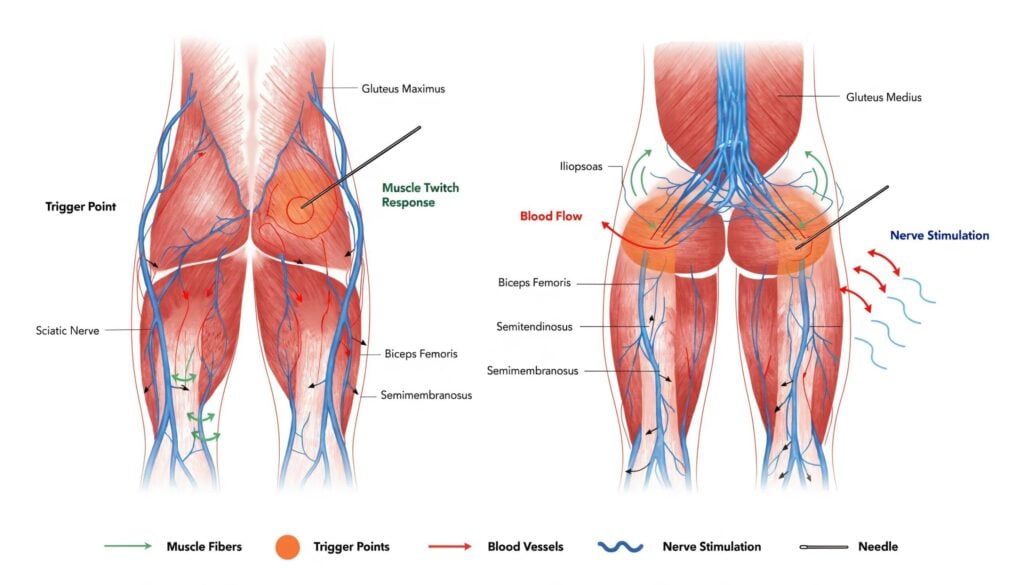
The physiological mechanisms of dry needling involve the stimulation of trigger points, which can lead to increased blood flow, reduced muscle tension, and the release of pain-relieving endorphins. When needles are inserted into these specific points, it causes a localized twitch response that releases tightness in the muscle, facilitating a healing response. This action not only alleviates immediate discomfort but also aids in long-term recovery by addressing underlying issues related to muscle and fascia dysfunction.
Despite its growing popularity, research continues to explore the exact physiological mechanisms and clinical effects of dry needling.
Physiological Mechanisms and Clinical Effects of Dry Needling
During the past decades, worldwide clinical and scientific interest in dry needling (DN) therapy has grown exponentially. Various clinical effects have been credited to dry needling, but rigorous evidence about its potential physiological mechanisms of actions and effects is still lacking. Research identifying these exact mechanisms of dry needling action is sparse and studies performed in an acupuncture setting do not necessarily apply to DN.
Physiologic effects of dry needling, B Cagnie, 2013
What Is the Role of Trigger Point Therapy in Dry Needling?
Trigger point therapy is fundamental to the efficacy of dry needling, as it focuses on identifying and treating the hyperirritable knots within muscle tissue. These trigger points can contribute to pain and restricted movement, making them crucial targets during treatment. By employing dry needling techniques, therapists can effectively deactivate these trigger points, resulting in significant pain relief and greater range of motion. The integration of trigger point therapy into dry needling allows for more comprehensive treatment of pain syndromes.
What Are the Steps of a Typical Dry Needling Procedure?
A typical dry needling procedure involves several key steps to ensure patient safety and effective treatment:
- Assessment: The therapist evaluates the patient’s condition and identifies trigger points.
- Preparation: Patients are informed about the procedure and what to expect.
- Needle Insertion: Fine needles are inserted into the identified trigger points.
- Observation: The therapist monitors the patient’s response during the treatment.
- Follow-Up: Post-treatment assessment occurs to determine effectiveness and plan further sessions.
Expectations for the procedure can vary depending on individual responses and treatment goals, but it generally aims for minimal discomfort and maximum therapeutic benefit.
What Are the Benefits and Risks of Dry Needling?
Like any therapeutic intervention, dry needling offers several benefits, including:
- Pain Relief: Immediate reduction in localized pain and discomfort.
- Improved Mobility: Enhanced flexibility and range of motion in affected areas.
- Faster Recovery: Quicker healing times for sports injuries and muscle strains.
However, patients should also be aware of potential risks that can include:
- Soreness: Mild discomfort at the needle insertion sites post-treatment.
- Bruising: Some patients may experience minor bruising as a result of the technique.
- Dizziness: A rare but possible side effect during or after the session.
Discussing these aspects with a qualified physical therapist helps ensure informed consent and addresses any concerns prior to treatment.
How Does Dry Needling Provide Myofascial Pain Relief and Improve Mobility?
Dry needling is particularly effective in providing myofascial pain relief through the targeted deactivation of trigger points. By releasing tension in tight muscles, dry needling promotes blood flow and metabolic activity in the affected area, facilitating the healing process. This therapeutic approach not only alleviates pain but also improves overall mobility, making daily activities easier and more comfortable for patients. With regular treatments, individuals often notice substantial improvements in both pain levels and physical function.
What to Expect During and After Dry Needling Treatment
What happens during a dry needling session?
Patients undergoing dry needling can expect a few key aspects during their sessions:
- Initial Consultation: Detailed discussions about individual conditions and treatment plans.
- Needle Insertion: A quick insertion of the needle, often described as a minor prick.
- Post-Treatment Effects: Some may experience soreness, while others feel immediate relief.
What are normal side effects after dry needling?
Understanding the possible side effects of dry needling is essential for patient safety and comfort. Common side effects may include:
- Mild Soreness: Similar to post-exercise soreness, which typically resolves within a couple of days.
- Bleeding or Bruising: Minor bleeding may occur at the needle insertion sites.
- Infection: Though rare, any procedure involving needles carries a slight risk of infection.
Safety considerations include ensuring that the procedure is performed by a trained practitioner and discussing any contraindications during the initial assessment. Proper hygiene practices, including the use of sterile needles, are maintained to minimize risks.
How many dry needling sessions will I need?
The patient recovery timeline after dry needling can vary based on several factors, including the severity of the condition being treated and individual patient response. Generally, patients may notice immediate pain relief, with optimal benefits being fully realized after several sessions. It is typical for a recovery timeline to span from a few days to a few weeks, depending on the underlying issues being addressed. Continuous evaluation by the physical therapist ensures that recovery progression is monitored and adjusted as necessary.
Is Polygon PT Right for Your Dry Needling Treatment?
Are Polygon PT therapists certified in dry needling?
At Polygon PT, our team comprises licensed physical therapists with specialized training in dry needling and various modern therapeutic techniques. Each therapist brings extensive knowledge of musculoskeletal health and a commitment to evidence-based practice. This expertise ensures that every patient receives high-quality care tailored to their specific therapeutic needs.
How do I schedule a dry needling appointment?
To schedule dry needling therapy at Polygon PT, patients can start by contacting our office to arrange an initial consultation. During this appointment, our team of experienced physical therapists will thoroughly assess individual needs and explain the dry needling process, ensuring that all patient questions are answered. Patients can conveniently book appointments via our contact page. We prioritize accommodating patient schedules and understanding their unique health concerns. With our qualified staff, patients can expect a professional environment dedicated to achieving optimal health and wellness outcomes through tailored treatment plans.
Leave a Reply