

TMJ Dry Needling: How This One Technique Relieves Jaw Pain and Headaches Fast
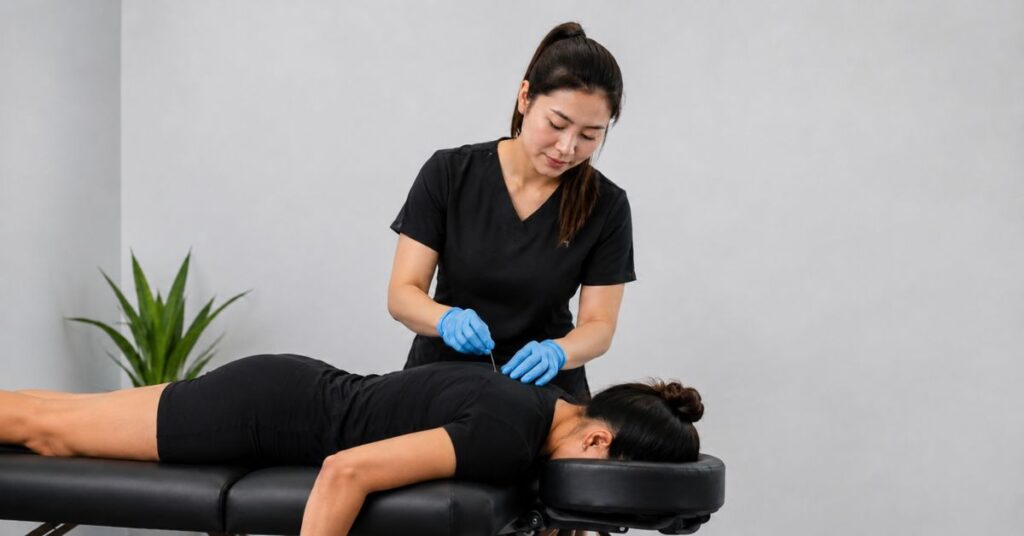
If you wake up with a sore jaw, catch yourself grinding your teeth, or deal with tension headaches that seem to come out of nowhere, your temporomandibular joint- the TMJ- could be the culprit. It’s one of the most overlooked sources of chronic pain in the face, head, and neck, and unfortunately, most people don’t connect the dots until they’ve been dealing with it for months.
At Polygon PT, serving patients throughout Sugar Land, Missouri City, and the Stafford area of West Houston, we regularly see people who have tried everything from bite guards to pain medication without lasting results. One of the most effective tools in our treatment approach is TMJ dry needling – a technique that targets the root of the problem directly, often bringing noticeable relief within just a few sessions.
Here’s what you need to know about it.
What Is the TMJ and Why Does It Cause So Much Pain?
The temporomandibular joint is the hinge connecting your jaw to your skull, located just in front of each ear. It’s responsible for every bite, chew, yawn, and word you speak. When the muscles and tissues around this joint become tight, inflamed, or overworked, they can refer pain to your temples, ears, neck, and even down into your shoulders.
What makes TMJ dysfunction particularly tricky is that it rarely stays local. The jaw is closely connected to the muscles of your neck and upper back, which is why many people with TMJ issues also experience chronic tension headaches, ear fullness, or unexplained facial pain. Clenching your teeth- even during sleep- can create a cycle of muscle overactivation that’s hard to break on your own.
What Is Dry Needling and How Does It Differ From Acupuncture?
Dry needling is a technique performed by trained physical therapists using thin, sterile monofilament needles. Despite the similar appearance to acupuncture, the two are very different in purpose and philosophy. Acupuncture is rooted in traditional Chinese medicine and focuses on energy pathways throughout the body. Dry needling is grounded in Western anatomy and neuroscience, and it targets specific muscle trigger points- those tight, tender knots that restrict movement and radiate pain.
When a needle is inserted into a trigger point, it causes a brief involuntary muscle twitch (called a local twitch response), which signals the muscle to release. Blood flow increases, muscle tension drops, and the pain cycle begins to reset. For the jaw and surrounding muscles, this can feel almost immediate.
How TMJ Dry Needling Works
When it comes to TMJ dry needling, the therapist targets the masseter, temporalis, pterygoid, and surrounding cervical muscles- all of which contribute to jaw tension and referred headache pain. These are small, layered muscles that are difficult to reach through conventional massage or stretching alone.
At Polygon PT in Sugar Land and West Houston, our clinicians take a full-body approach before ever picking up a needle. We assess your jaw mechanics, neck alignment, shoulder position, and posture- because the jaw doesn’t exist in isolation. A forward head posture, for example, places constant strain on the muscles at the base of the skull that connect directly to the jaw complex.
Once trigger points are identified, the dry needling treatment itself is typically brief. Most patients feel mild pressure, a muscle twitch, and then a noticeable release. Some describe a dull ache or brief soreness afterward- similar to how your muscles feel after a solid workout- but this typically fades within 24 to 48 hours.
What Results Can You Expect?
Most patients treated at Polygon PT for jaw pain notice a meaningful reduction in symptoms within one to three sessions. That said, dry needling works best as part of a broader treatment plan. After releasing the trigger points, our physical therapists guide you through exercises that retrain jaw mechanics, correct posture, and prevent the tension from returning.
Common results patients report include reduced jaw clicking or locking, fewer tension headaches, improved mouth opening range, less morning soreness from clenching, and an overall decrease in facial tightness. Some patients also notice that neck stiffness and upper back tension improve alongside their jaw pain- which makes sense, given how interconnected those muscle groups are.
Is TMJ Dry Needling Right for You?
If you live in Sugar Land, Stafford, Missouri City, or nearby West Houston neighborhoods and you’ve been dealing with any of the following, it may be worth getting evaluated:
Chronic jaw pain or soreness that gets worse through the day, tension headaches that seem to start at the temples or back of the skull, clicking or popping in the jaw when you open and close your mouth, difficulty opening your mouth fully, pain while chewing or talking, and ear pain or a sensation of fullness without any ear infection.
Dry needling is generally well-tolerated and minimally invasive. At Polygon PT, our licensed physical therapists take the time to walk you through every step before beginning treatment, so there are no surprises. If needles aren’t your preference, we also offer manual therapy and other techniques that address similar trigger points- your comfort matters to us.
Why Polygon PT for TMJ Treatment in Sugar Land and West Houston
Polygon PT was founded in Sugar Land, TX in 2017 by Dr. Parth, with a clear mission: provide the kind of one-on-one, personalized care that actually gets results. With locations in Sugar Land on Creekbend Drive and in West Houston on Westheimer Road, we’re conveniently located for patients throughout the Southwest Houston corridor – including Stafford, Missouri City, and the First Colony area.
Unlike larger physical therapy chains where you might see a different provider every visit, our clinicians build a relationship with you. They know your history, your goals, and what makes your symptoms better or worse. That continuity matters enormously when you’re treating something as complex and interconnected as jaw dysfunction.
With over 200 five-star Google reviews and a team of 12+ clinicians, Polygon PT has built a reputation in the Sugar Land community as a place where people get better- not just managed.
If jaw pain or chronic headaches have been slowing you down, don’t wait. Schedule a consultation at Polygon PT today and find out whether TMJ dry needling is the solution you’ve been missing.
Conclusion
TMJ dysfunction doesn’t resolve on its own, and bite guards only mask the problem. Dry needling gets to the source – releasing the trigger points that keep your jaw, head, and neck locked in a pain cycle.
At Polygon PT in Sugar Land and West Houston, you don’t get a generic plan. You get a therapist who knows your case, your history, and your goals – every single visit.
Frequently Asked Questions:
Q1: Does TMJ dry needling hurt?
Most patients feel mild pressure and a brief muscle twitch during treatment. Any soreness afterward typically resolves within 24 to 48 hours. The majority of patients find it very tolerable and report relief right after their session.
Q2: How many sessions of dry needling will I need for TMJ relief?
Many patients notice improvement within one to three sessions. The total number depends on symptom severity. At Polygon PT, your therapist will reassess regularly and adjust your treatment plan accordingly for best results.
Q3: Is dry needling covered by insurance for TMJ treatment?
Coverage varies by insurance plan and policy. Polygon PT accepts many major insurance plans including Medicare and United Healthcare. It’s best to contact the clinic directly to verify your specific benefits before your first appointment.
Q4: Can dry needling help with TMJ-related headaches, not just jaw pain?
Yes. Many tension headaches originate from the same overactive jaw and cervical muscles that cause jaw pain. TMJ dry needling releases these trigger points, which often reduces headache frequency and intensity significantly alongside jaw symptoms.
Q5: Is there anything I should do to prepare for a TMJ dry needling session?
Eat a light meal beforehand and stay well hydrated. Wear comfortable clothing. Avoid strenuous jaw activity immediately before your appointment. Your Polygon PT therapist will walk you through everything during your initial evaluation to make sure you feel confident and prepared.